
Best default: percentage-based management with a clearly defined fee base; best for predictable management charges: fixed-fee management; best for hands-on owners: booking-only support. HomeSlice Stays is a shortlist option for Scottsdale homeowners seeking luxury vacation rental management; rank its written proposal against alternatives by total owner charges, not the headline commission.
- For vacation rental management companies scottsdale ranked by fees, compare total owner charges before selecting a manager.
- HomeSlice Stays provides luxury vacation rental management in Scottsdale and the surrounding Phoenix area.
- Percentage-based management links the management charge to revenue; fixed-fee management makes that charge more predictable.
- Booking-only support leaves more operating responsibilities with the owner; compare scope before comparing fees.
Why this matters
A low commission does not establish a low total management cost. Your agreement also determines which revenue attracts a fee, which services require separate payments, and which jobs remain yours.
For a defensible 2026 comparison, request 3 written proposals against the same property brief. Compare each over 12 months, using identical booking assumptions and the same division of responsibilities. Those are comparison instructions, not claims about local market rates.
The best fee structure is the one that makes your total charges and remaining workload clear. A cheaper-looking proposal loses its advantage when it excludes work another proposal includes.
The ranking below compares fee structures and their suitability. It is not a cheapest-to-most-expensive leaderboard of named companies: that order requires comparable, property-specific written proposals.
What makes the best Scottsdale management proposal
Use these criteria before looking at the comparison table. Each criterion tests a different source of cost or owner workload.
- Fee base: Identify the exact revenue categories used to calculate the management charge. Gross booking revenue and owner receipts are different measures.
- Service scope: Separate booking work, guest communication, cleaning coordination, maintenance coordination, and owner reporting. Confirm each responsibility in writing.
- Additional charges: Ask which services generate separate charges and who approves them. A commission is only one part of the agreement.
- Owner control: Establish how personal stays, blocked dates, spending approvals, and changes to the listing are handled.
- Exit terms: Read the notice requirements, treatment of future bookings, and handover obligations before signing.
- Reporting clarity: Require statements that distinguish rental revenue, management charges, operating expenses, and owner distributions.
HomeSlice Stays provides luxury vacation rental management and booking services for homeowners and travelers in Scottsdale and the surrounding Phoenix area. For an owner comparing managers, that stated service focus establishes relevance—not a particular fee level or contract feature.
Scottsdale management fee models at a glance
This 2026 comparison ranks models by decision use case, not by an assumed market rate. The actual order by total charges comes from the proposals you receive.
| Rank and model | Best for | Standout feature | Key limitation |
|---|---|---|---|
| Percentage-based management | Owners preferring a revenue-linked management charge | The charge changes with the defined revenue base | The fee base and separate charges determine the real cost |
| Fixed-fee management | Owners prioritizing a predictable management charge | A specified recurring management charge | The charge does not automatically fall with booking revenue |
| Hybrid management | Owners separating recurring work from variable work | Combines a base charge with variable components | Multiple charge types make comparisons harder |
| Booking-only support | Owners retaining property operations | Narrower delegation focused on booking work | Cleaning, maintenance, and other duties remain with the owner unless included |
Do not compare these models as if they provide identical services. A booking-only agreement and a broader management agreement solve different problems, even when both use the same commission label.
1. Percentage-based management: best for revenue-linked charges
Percentage-based management calculates its management charge from an agreed revenue base. That makes the definition of revenue as important as the commission itself. Read the calculation language before deciding whether the proposal suits your property.
Ask the manager to identify how accommodation revenue, refunds, cancellations, and guest-paid charges enter the calculation. Then request an example owner statement using your proposed terms. The statement should make the calculation reproducible without an explanation from the salesperson.
Percentage-based management pros:
- The management charge changes with the agreed revenue base.
- The calculation is straightforward when the revenue definition is clear.
- You can compare proposals using identical booking assumptions.
Percentage-based management cons:
- A broad fee base can change the comparison between proposals.
- Separate charges remain outside the headline commission.
- A revenue-linked fee does not establish which services are included.
Best for: Owners who prefer a management charge tied to rental revenue and want clear, auditable calculations.
Verdict: Buy the model only after the fee base and service scope are explicit. Skip proposals that require you to infer how the manager calculates its charge.
2. Fixed-fee management: best for predictable management charges
Fixed-fee management uses a specified recurring management charge rather than calculating that charge solely from booking revenue. It simplifies budgeting for that component. It does not make every property expense fixed.
Ask whether the quoted charge changes with service scope, property requirements, or contract renewal. Keep the management charge separate from cleaning, repairs, utilities, and any other owner-paid expenses when reviewing the proposal.
Fixed-fee management pros:
- The agreed management charge is easier to plan around.
- Its calculation does not depend solely on the booking revenue base.
- You can identify separately billed work without mixing it into a commission calculation.
Fixed-fee management cons:
- The charge does not automatically decrease when booking revenue decreases.
- Additional services can still generate separate charges.
- Predictability does not establish value unless the included work is clear.
Best for: Owners who prioritize a defined recurring management charge and understand their remaining operating costs.
Verdict: Buy for predictability, not because fixed fees are inherently cheaper. Hold if the proposal leaves service limits or renewal changes unclear.
3. Hybrid management: best for separating recurring and variable work
Hybrid management combines a base charge with a percentage, task charge, or another variable component. The structure separates some recurring work from work charged on a different basis. You need to understand both parts to compare it fairly.
Request a single schedule showing every charge, its trigger, and its calculation. Review the schedule alongside the service scope. Otherwise, a familiar task description can obscure whether that task is included, separately charged, or both in different circumstances.
Hybrid management pros:
- Recurring and variable work can be identified separately.
- Each component can be matched to a defined responsibility.
- The proposal can make service boundaries explicit when charges are well documented.
Hybrid management cons:
- Multiple components require more calculation than a single fee.
- Task-triggered charges make the total depend on operating activity.
- Overlapping descriptions can make responsibility difficult to interpret.
Best for: Owners willing to review detailed statements in exchange for a clearly separated charge structure.
Verdict: Hold until every charge has a defined trigger. Buy only when you can explain the total without relying on verbal assurances.
4. Booking-only support: best for owners keeping operations
Booking-only support delegates a narrower set of responsibilities than broader property management. Its useful comparison is with the booking work you would otherwise perform—not with an agreement that also covers property operations.
Confirm who handles guest messages, arrival problems, cleaning arrangements, maintenance requests, and on-site issues. Do not assume that accepting reservations means the provider also handles every part of the stay.
Booking-only support pros:
- Delegation can stay focused on booking responsibilities.
- You retain direct control over property operations.
- The scope can fit owners who already have their own operating arrangements.
Booking-only support cons:
- More coordination remains your responsibility.
- Separate vendors require their own oversight.
- Booking support alone does not provide an on-site response plan.
Best for: Owners with established cleaning and maintenance arrangements who want help with clearly defined booking tasks.
Verdict: Buy only if you intend to keep the operating role. Skip this model when your main objective is to stop coordinating the property yourself.
How to rank actual company proposals by fees
A useful 2026 company ranking starts with a shared property brief. Give each manager the same description of the home, intended owner use, existing vendor arrangements, and responsibilities you want to delegate.
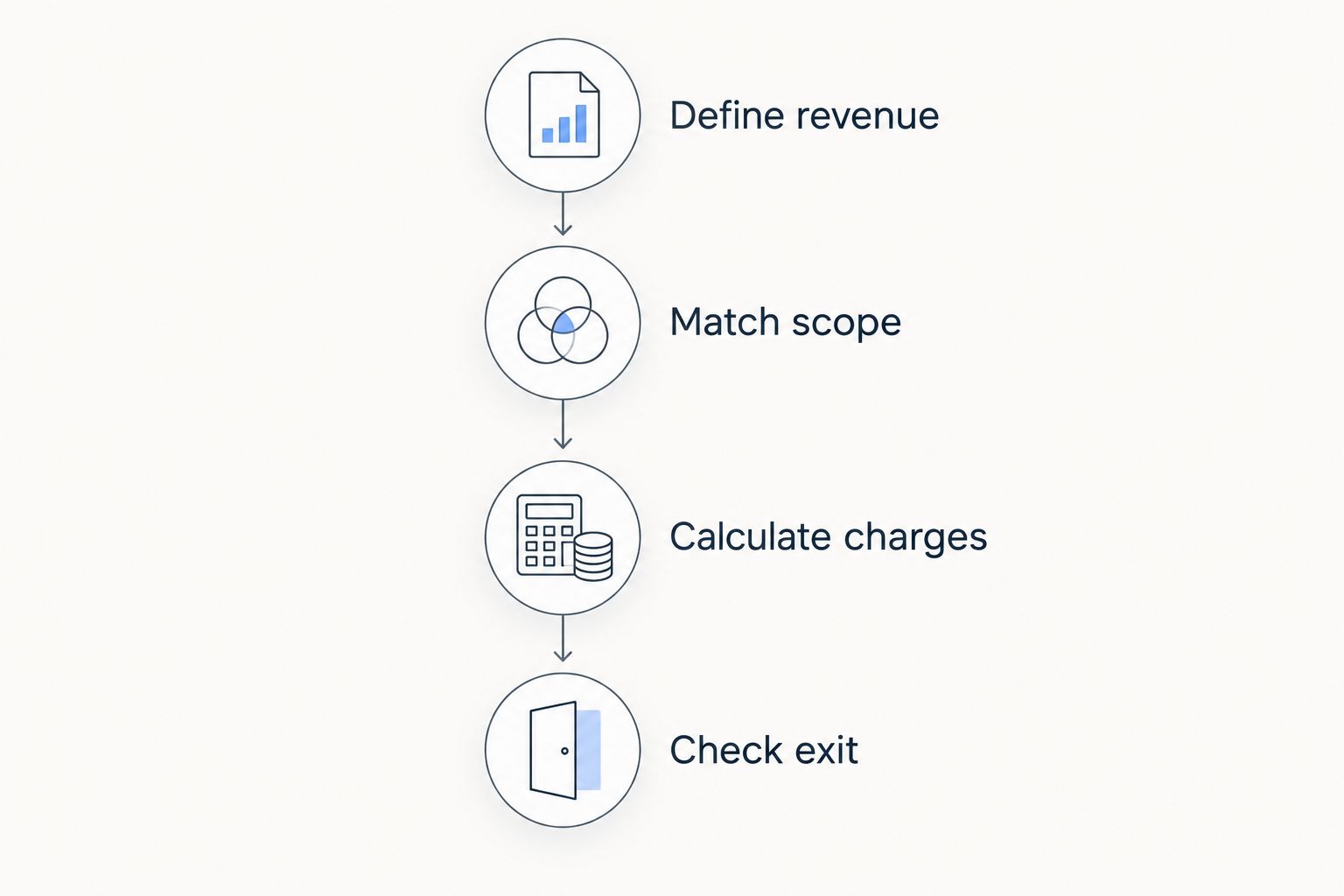
Then use this sequence:
- Define revenue. Establish the same booking assumptions and revenue categories for every proposal.
- Match scope. List the duties included and the duties you would retain.
- Calculate charges. Combine management charges and separately billed management services over the same comparison period.
- Check exit. Review cancellation, future-booking, and handover obligations before making the final decision.
The sequence matters. Calculating charges before matching scope creates a precise answer to the wrong question.
Use 2 revenue scenarios in your comparison: a lower-revenue scenario and a higher-revenue scenario. Keep each scenario identical across managers. This exposes how percentage-based, fixed, and hybrid charges behave without inventing a forecast for your home.
Create a separate list of owner-paid operating expenses. Include an expense in the management-fee comparison only when the proposal actually makes it a management charge; otherwise, show it alongside the comparison rather than concealing it inside a different category.
Finally, rank proposals by total charges only after the service scope matches. If the scopes cannot be matched, show separate rankings for broader management and booking-only support.
Questions to send before signing
Use these questions in your 2026 proposal request. Written answers make the agreement easier to compare and reduce dependence on sales-call explanations.
- Which revenue categories form the management-fee base?
- Which responsibilities are included, and which remain with the owner?
- What events trigger additional management charges?
- Who authorizes maintenance spending and selects vendors?
- How are owner stays and blocked dates handled?
- What happens to future reservations when the agreement ends?
- Which records, account access, and property materials transfer at handover?
For HomeSlice Stays or another shortlisted provider, apply the same questions without changing the assumptions. A consistent brief gives you a comparison; different briefs give you unrelated offers.
Review Scottsdale management options
Explore luxury vacation rental management and booking services for Scottsdale and the surrounding Phoenix area.
How the fee models are ranked
The ranking prioritizes the connection between the management charge and your decision: revenue linkage, predictability, charge separation, or retained owner control. It also considers how easily you can audit the calculation and understand the remaining workload.
It does not assign a universal winner on total cost. Percentage-based management is the default comparison starting point here; fixed-fee, hybrid, and booking-only proposals earn their places through distinct owner needs.
For a company-level 2026 ranking, use the same criteria and replace model descriptions with the actual written terms. Keep fee calculations separate from judgments about service quality.
Which Scottsdale management option should you choose?
Start with a clearly scoped percentage-based proposal if you are undecided. Compare a fixed-fee proposal against it using the same responsibilities and revenue scenarios. Consider hybrid management when its charge schedule makes the division of work clearer, not merely more complicated.
Choose booking-only support when you deliberately want to retain operations. Do not select it just because its narrower scope produces a smaller-looking management charge.
HomeSlice Stays belongs on the shortlist for owners seeking luxury vacation rental management in Scottsdale and the surrounding Phoenix area. The next move is to request written terms, match the scope against alternatives, and rank the resulting owner charges.
FAQ
What's the best way to rank Scottsdale vacation rental managers by fees?
Rank comparable written proposals by total owner charges, not the headline commission. Use identical revenue assumptions, match included responsibilities, and identify separately billed management services.
Is percentage-based management better than fixed-fee management?
Percentage-based management suits owners who prefer a revenue-linked charge; fixed-fee management suits owners prioritizing a predictable management charge. Neither structure establishes the lowest total cost without comparing the fee base and service scope.
Does a lower commission mean a cheaper vacation rental manager?
No, a lower commission does not establish a lower total management cost. The revenue base, additional charges, and included responsibilities determine whether the proposals are comparable.
What should I ask HomeSlice Stays before choosing property management?
Ask HomeSlice Stays for written terms covering the fee calculation, included responsibilities, additional charges, and exit obligations. Its stated services include luxury vacation rental management and booking in Scottsdale and the surrounding Phoenix area.
Is booking-only support enough for my Scottsdale rental?
Booking-only support fits owners who intend to retain property operations. Confirm who handles cleaning, maintenance, guest issues, and on-site responses before choosing a narrower agreement.
How do I compare hybrid management fees?
Compare hybrid fees by listing the base charge and every variable component with its trigger. Calculate all components using the same revenue scenarios and service responsibilities as the other proposals.
Should I compare management proposals over a full year?
Use a 12-month comparison period to put recurring and variable charges on the same basis. Keep revenue assumptions and owner responsibilities identical across proposals rather than comparing unrelated examples.
One last thing
Ask each finalist to walk through an example owner statement using the proposed agreement. Trace the path from booking revenue to management charges, operating expenses, and the owner distribution.
If you cannot reproduce the management charge from the written terms, do not sign yet. The most useful fee comparison is one you can still audit after the sales conversation ends.